On 31 January 2027, the UK’s traditional copper telephone network — the PSTN — will be permanently switched off. Every landline, fax machine, alarm system, and ISDN connection that relies on it will stop working. Yet as of early 2026, over 500,000 business lines still haven’t migrated, and only 18% of small businesses have a replacement solution in place. If your business uses a traditional phone line, the clock is ticking.
This guide explains exactly what the PSTN switch-off means for small businesses, what will stop working, what your options are, and how to make the transition as painless as possible — with time to spare.
What Is the PSTN?
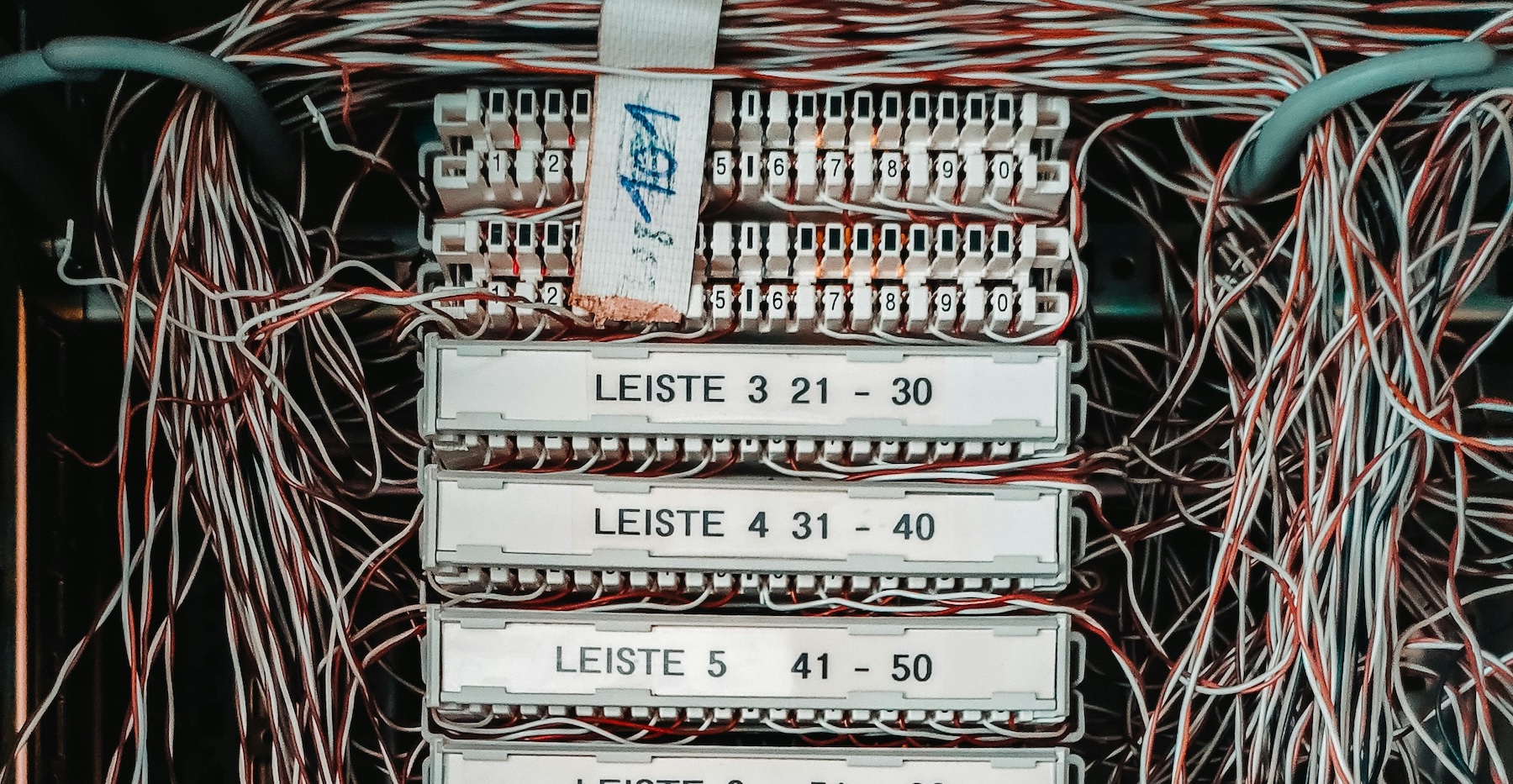
The PSTN — Public Switched Telephone Network — is the traditional copper wire telephone system that has carried UK landline calls for decades. When you think of a “normal” phone line — the kind with a physical socket in the wall, a dial tone, and a phone plugged into it — that’s the PSTN.
Built originally for voice calls, the PSTN also underpins a vast range of other services that businesses rely on daily: fax machines, card payment terminals, burglar alarms, door entry systems, lift emergency phones, and older broadband connections (ADSL). It’s the invisible infrastructure behind millions of UK businesses.
ISDN lines — both ISDN2e and ISDN30 — also run over this copper network. If your business uses ISDN for phone systems, conferencing, or data, those lines are switching off too.
Why Is It Being Switched Off?
The copper network is old. Much of it dates back to the mid-20th century, and maintaining it has become increasingly expensive and impractical. The technology is outdated, spare parts are harder to source, and the engineers who specialise in it are retiring.
BT Openreach — the company responsible for the UK’s telephone infrastructure — has decided that continuing to prop up a legacy network alongside modern fibre and digital systems is no longer sustainable. The future is Internet Protocol (IP) — where voice calls travel over broadband connections rather than dedicated copper wires.
This isn’t unique to the UK. Countries across Europe and around the world are making the same transition. Germany, France, and the Netherlands have already completed or are well advanced in their own switch-offs. The UK is, if anything, behind the curve.
The switch-off isn’t optional. This isn’t a product being phased out where you can choose to keep using it. The physical network is being decommissioned. When the PSTN goes, traditional lines will simply stop carrying calls.
The Timeline: What’s Happening and When
The PSTN switch-off was originally planned for December 2025 but was delayed to give businesses more time to prepare. The new — and final — deadline is 31 January 2027. Openreach has confirmed this date is “locked in” and will not be extended again.
But the disruption starts well before January 2027. Openreach is actively discouraging businesses from staying on legacy products by making them significantly more expensive:
April 2026 – First Price Hike
Legacy PSTN and ISDN product prices increase by 20%. If you’re still on a traditional line, your bills go up immediately.
July 2026 – Second Price Hike
Another 40% increase on top of the April rise. Your traditional line is now costing substantially more than it did a year ago.
October 2026 – Third Price Hike
A further 40% increase. By this point, your legacy line costs will have roughly doubled compared to last year. The message is clear: migrate now or pay through the nose.
31 January 2027 – Permanent Switch-Off
The PSTN is decommissioned. All remaining traditional lines, ISDN connections, and copper-dependent services cease to function. There is no grace period.
Even if you plan to use your traditional line until the very end, you’ll be paying double what you paid last year by October 2026. Migrating early saves money immediately — and avoids the last-minute rush when demand for migration support will be at its peak.
What Stops Working on Switch-Off Day?
The PSTN switch-off doesn’t just affect the phone on your desk. Any equipment or service that connects through a traditional phone line will be impacted. For many businesses, the phone itself is only the tip of the iceberg.
| Equipment / Service | Impact | Action Required |
|---|---|---|
| Traditional landline phones | Will not make or receive calls | Replace with VoIP, virtual number, or IP phone |
| Fax machines | Will stop working entirely | Switch to online fax or email |
| Burglar alarm lines | Alarm may not contact monitoring centre | Upgrade to IP or mobile-connected alarm |
| Door entry systems | Intercom/buzz-in systems may fail | Upgrade to SIP-compatible system |
| Lift emergency phones | Emergency calls from lifts will fail | Upgrade to GSM/4G lift phone |
| EPOS / card payment machines | Dial-up terminals will not process payments | Switch to broadband or mobile terminal |
| CCTV monitoring | Remote monitoring connections may fail | Move to IP-based CCTV |
| ADSL broadband | ADSL requires a phone line — it will stop | Upgrade to fibre (FTTP/FTTC) or SOGEA |
The scale of the problem is significant. Over 12,000 lift emergency phone lines and 500+ CCTV monitoring lines across the UK still need upgrading. An estimated 1.5 million businesses rely on at least one PSTN-connected device beyond their main phone line.
Walk through your premises and make a list of every device that connects through a phone socket. Include alarm panels, card machines, door buzzers, and any equipment with a phone cable running to it. Each one will need a digital alternative before January 2027.
Who Is Affected?
If your business has a traditional landline — the kind with a physical BT-style socket and a dial tone — you are affected. If you have ISDN lines for a phone system, you are affected. If your broadband is ADSL (delivered through a phone line), you are affected.
The businesses most at risk are those that don’t yet realise there’s a problem. As of early 2026, 9% of UK businesses are still completely unaware of the switch-off. That’s tens of thousands of companies heading towards January 2027 with no plan in place.
Small businesses are disproportionately affected because they’re less likely to have dedicated IT support, less likely to have been contacted by their provider about migration, and more likely to be relying on older equipment that hasn’t been updated in years.
What Happens to My Phone Number?
This is one of the biggest concerns small businesses have — and the good news is straightforward. You can keep your existing phone number. The switch-off retires the copper network, not the numbers that run on it.
Through a process called number porting, your existing landline number can be transferred to a VoIP provider, a hosted phone system, or a virtual phone number service. The number stays the same — your customers, your website, your business cards, your Google listing — nothing changes from their perspective. The only difference is that calls are carried over the internet rather than copper wires.
Number porting typically takes 5–10 working days, though it can vary depending on the losing provider. The key is to start the process well before the deadline, not in the final weeks when porting teams will be swamped with last-minute requests.
At Virtually Local, porting is completely free. We handle the entire process for you — you keep your existing number, your customers notice nothing, and you gain access to a full suite of modern call management features. There’s no disruption to your service during the transfer.
Your Options After the PSTN
You have several choices for replacing your traditional phone line. The right one depends on the size of your business, your budget, and how you use your phone. Here’s how the main options compare:
| Option | Best For | Typical Cost | Requires |
|---|---|---|---|
| Virtual phone number | Sole traders, small businesses, remote workers | From £4.95/month | Any phone (mobile or landline) to receive forwarded calls |
| VoIP desk phone | Offices needing physical handsets | £10–£30/month per user | Broadband connection, IP handset |
| Hosted phone system | Larger teams needing extensions, IVR, queues | £15–£40/month per user | Reliable broadband, IP handsets or softphones |
| SOGEA line | Premises needing broadband without a phone line | Varies by provider | Fibre-enabled area |
| SOTAP line | Areas without fibre coverage | Varies by provider | Copper infrastructure (repurposed for broadband only) |
For most small businesses — tradespeople, freelancers, sole traders, small shops, and service companies — a virtual phone number is the simplest, most affordable, and most flexible replacement. It requires no new hardware, no broadband dependency for receiving calls, and can be set up in minutes.
For a deeper look at what happens to your phone service after the switch-off, read our guide on what happens to business phone lines after 2027.
Why Virtual Numbers Are the Smart Choice for Small Businesses
A virtual phone number is a phone number that isn’t tied to a physical line or location. Calls to your virtual number are routed over the internet and forwarded to any phone you choose — your mobile, a colleague’s phone, or multiple phones simultaneously. It’s the modern replacement for a traditional landline, without the copper wire.
For small businesses facing the PSTN switch-off, virtual numbers solve the problem completely:
-
No copper dependency Virtual numbers don’t use the PSTN at all. They’re already digital, so the switch-off doesn’t affect them. This is a future-proof solution, not a temporary fix.
-
Keep your existing number Port your current landline number to a virtual service and your customers won’t notice any change. Same number, better features.
-
Intelligent call forwarding Forward calls to your mobile, a landline, or multiple phones. If you don’t answer, calls go to cloud voicemail and are emailed to you as audio files.
-
Time-of-day routing Route calls differently depending on the time of day or day of the week. Business hours ring your phone; evenings go to voicemail with a professional greeting.
-
Call recording Record calls for training, compliance, or dispute resolution — something a traditional landline couldn’t do without expensive add-on equipment.
-
Full online control Manage everything through the Virtually Local online portal. Change forwarding destinations, update greetings, view call history — all from your phone or computer.
Unlike a hosted phone system that requires broadband and IP handsets, a virtual number works with the phone you already have. There’s nothing to install, no hardware to buy, and no IT expertise needed. For the full list of what’s included, visit our features page.
Getting Started: How to Switch Before the Deadline
Whether you’re replacing a traditional landline or setting up a new number from scratch, the process with Virtually Local takes minutes — not weeks.
Audit Your Current Setup
Identify every device and service connected to your traditional phone line. Your main phone, alarm system, card machine, fax — each needs its own digital replacement. The phone number itself is the easiest part to migrate.
Choose Your Number
Pick a local area code that matches your business location, or choose a number for each area you serve. If you want to keep your existing landline number, we’ll handle the free porting process for you.
Set Up Call Handling
Configure where calls should ring — your mobile, a colleague, or both. Add time-of-day routing, voicemail-to-email, and any other features you need. Everything is managed through your online dashboard.
Go Live
Your virtual number activates instantly. If you’re porting an existing number, you’ll use a temporary number while the port completes (typically 5–10 working days), then your original number switches over seamlessly.
For a step-by-step walkthrough of replacing your landline before the copper network closes, see our detailed guide: How to Replace Your Business Landline Before the Copper Network Closes.
Number porting requests will surge in the final months before January 2027. Porting teams at every provider will be under pressure, and delays are inevitable. Starting your migration now means a smooth, stress-free transition with full support from our team.
The Bottom Line
The PSTN switch-off is not a future possibility — it’s a confirmed event with a fixed date. On 31 January 2027, the UK’s copper telephone network will be permanently decommissioned. Every traditional landline, ISDN connection, and copper-dependent device will stop working. Openreach has stated unequivocally that there will be no further extensions.
For small businesses, the practical impact is significant but entirely manageable — provided you act in good time. Your phone number can be kept. Your calls can be handled better than ever. And the cost of a modern replacement is almost certainly less than what you’re paying for your legacy line, especially once the 2026 price increases take effect.
The businesses that migrate early will benefit from lower costs, better features, and a smoother transition. The businesses that wait will face rising bills, limited support, and the real risk of losing their phone service at the worst possible moment.
Virtually Local virtual phone numbers are completely PSTN-independent, start from just £4.95 per month, and activate instantly. Porting is free, there are no contracts, and you get access to professional call management features that a traditional landline could never offer. Visit our PSTN Switch-Off page to learn more, or get started today and have your new number working in minutes.
Ready to Get Your Local Business Number?
Choose from hundreds of UK area codes and start receiving calls in minutes.
Browse Area Codes