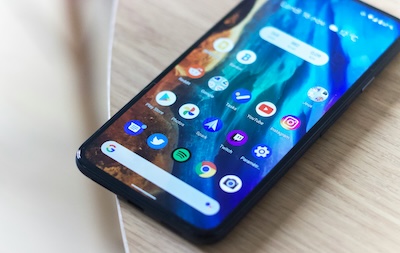
A virtual phone number is a standard UK landline number that isn't tied to a physical phone line. Instead of copper cables running into an office, calls are routed over the internet and forwarded to whatever device you choose — your mobile, a landline, or multiple phones at once. From the caller's perspective, it looks and sounds exactly like any other business number.
For UK small businesses, virtual numbers solve a surprisingly long list of problems. Here are seven benefits that make the biggest practical difference.
1. Instant Local Credibility Without a Local Office
Your phone number is often the first thing a potential customer sees, and it shapes their expectations before you've said a word. In a 2025 Censuswide survey of 2,000 UK consumers for Zen Internet, over a third (35%) said they wouldn’t trust a small or medium-sized business that only uses a mobile number[1], and 48% said they trust bigger businesses more when they have a landline. The number also affects whether your call gets answered at all: Ofcom found that over 90% of mobile users decide whether to answer a call based on the number displayed[2] at least some of the time.
A virtual number gives you a proper local landline — with the area code of your choice — regardless of where you actually work. A freelance web developer in Stockport can have an 0161 Manchester number. A consultant working from home in Surrey can have a 020 London number. A tradesperson covering multiple towns can have a number for each area they serve.
The customer sees a local number, assumes a local presence, and is more likely to pick up the phone. That's the entire point — and it works whether you're at your desk, on a job site, or sitting in a coffee shop.
For more on why local numbers carry so much weight, see our article on why customers prefer calling local business numbers.
2. Dramatic Cost Savings Over Traditional Phone Lines
Traditional business landlines come with costs that add up fast: line rental, installation fees, hardware, and engineer callouts whenever something changes. A virtual number strips all of that away.
| Cost | Traditional BT Landline | Virtual Number |
|---|---|---|
| Monthly line rental | £25–£30+ | From £4.95 |
| Installation | £50–£150+ | Free |
| Hardware (desk phone) | £50–£200+ | None required |
| Engineer visits for changes | £50–£100+ per visit | Self-service online portal |
| Contract length | 12–24 months typical | Monthly rolling |
| Second line / additional number | £25–£30+ per month each | From £4.95 per month each |
The figures above are typical ranges rather than quotes, and legacy copper is only getting dearer: Openreach’s wholesale price rises during 2026 have effectively doubled legacy line rental compared with 2025 rates[3]. And because virtual numbers are a dedicated business expense, the full cost is claimable against tax — no apportionment needed between personal and business use.
With the UK's PSTN copper network being switched off on 31 January 2027 — now just weeks away — every business will need to move to internet-based telephony anyway. Virtual numbers already use this technology, so there's no future migration cost to worry about.
3. Work From Anywhere Without Missing a Call
Working patterns have changed for good. The ONS found that 28% of working adults in Great Britain were hybrid working[4] in early 2025, and the government’s business population estimates show that around three-quarters of the UK’s 5.6 million private sector businesses have no employees[5] — many of them run from home, a van, or a client’s site. A traditional landline ties you to a desk. A virtual number follows you wherever you go.
Your virtual number forwards calls to whatever device you choose:
-
Your mobile phone The most common setup. Calls to your business landline ring on the mobile you already carry. You answer them wherever you are — at home, on a train, on site, or in a meeting room.
-
A home or office landline If you prefer a desk phone when you're working from home, your virtual number can forward there instead — or as well as your mobile.
-
Multiple phones simultaneously With a hunt group, calls ring several team members at once. The first person free picks up. The customer experiences a seamless, professional call regardless of where each team member is working.
The customer never knows the difference. They dial a local landline number and someone answers professionally. Whether that person is in a corner office or a kitchen in Crewe is entirely irrelevant.
4. Professional Call Management Features Built In
A virtual number isn't just a forwarding address. It comes with call management features that used to require expensive PBX equipment and a dedicated IT team. For small businesses, these features are the difference between sounding like a one-person operation and sounding like an established company.
-
Time-of-day routing Set business hours so calls forward to your mobile during the day and go to a professional voicemail in the evening. Customers hear your business name and hours; you get your evenings back. It’s the simplest way to create a boundary between work and home.
-
Voicemail to email Voicemail messages arrive as audio files in your inbox. No dialling in, no PINs, no listening through old messages. You hear what the customer said and call back. Many callers won’t leave a message at all, so those who do deserve a prompt response.
-
Missed call alerts Every missed call triggers an instant email notification with the caller's number and the time of the call. A caller who can’t get through will often simply try the next business on the list, so a quick call-back matters. Missed call alerts ensure you know about every one.
-
Call recording Record calls for training, compliance, or dispute resolution. Recordings are stored securely and accessible through the online management portal. Essential for regulated industries and useful for any business that agrees terms verbally.
-
Hunt groups and call distribution Ring multiple phones simultaneously or in sequence. If you're busy, the call moves to the next person. If nobody answers, it falls to voicemail with your business greeting. No receptionist needed.
All of these features are managed through an online portal — no engineer visits, no hardware configuration, no waiting on hold with a provider. You change a setting, and it takes effect immediately.
5. A Clean Separation Between Business and Personal
When your personal mobile doubles as your business line, everything blurs. You can't tell if a missed call is a customer or a friend. You answer business calls at dinner. Spam marketers who scraped your business number have your personal mobile. And HMRC expects you to split your phone bill between personal and business use.
A virtual number draws a clean line:
| Issue | Personal Mobile as Business Line | Dedicated Virtual Number |
|---|---|---|
| Identifying callers | Every unknown number is a coin toss | Calls to your business number are always business |
| After-hours calls | Arrive on the same phone you use for everything | Automatically go to business voicemail |
| Privacy | Your personal number is on every directory and listing | Your personal number stays private |
| Spam | Business spam arrives on your personal phone | Business spam stays on your business number |
| Tax claims | Must apportion personal vs business use | 100% claimable as a business expense |
| Selling the business | The number goes with you, not the business | The number transfers with the business |
This separation isn't a luxury — it's a practical necessity as your business grows. The sooner you establish it, the less disruption you face later.
For a deeper look at why this matters, see our article on why every small business should have a dedicated phone number.
6. Stronger Local SEO and Online Visibility
Your phone number isn't just a way for customers to reach you — it's a signal to Google about where your business operates and how established it is.
Google's local search algorithm uses NAP (Name, Address, Phone) consistency as a ranking factor. A virtual landline number strengthens this signal in three ways:
Citation Consistency
A dedicated business number that never changes creates identical citations across your website, Google Business Profile, Yell, Thomson, Checkatrade, and every other platform where your business appears. Inconsistent phone numbers across directories confuse Google and can actively harm your rankings.
Click-to-Call Conversions
On mobile search results, your phone number becomes a clickable call button. A local landline number in that position converts better than a mobile number because users trust it more. Higher click-to-call rates signal to Google that your listing is relevant and useful, reinforcing your position in search results.
For a comprehensive guide on optimising your phone number for search, see our article on how local phone numbers help you rank in local Google searches.
7. Future-Proofed Against the 2027 Landline Switch-Off
On 31 January 2027 — just weeks from now — the UK's traditional copper telephone network, the PSTN, will be permanently switched off. Every landline in the country, including those in offices, will stop working unless the business migrates to an internet-based system.
Plenty of businesses are still cutting it fine. Openreach figures reported at the end of October 2026 showed around 1 million lines still on copper, including roughly 300,000 business premises[6], and Openreach has been clear that “there is no extension to the deadline”[7]. Businesses that leave migration to the last minute risk delays and a rushed choice of provider. Our PSTN switch-off checklist for the final 12 weeks walks through what to do now.
If you're using a virtual phone number, you're already running on the technology that replaces the PSTN. When the switch-off happens, nothing changes for you. Your number keeps working, your calls keep forwarding, and your customers notice no difference. While competitors scramble to replace their copper lines, you'll have been operating on modern infrastructure for months or years.
Virtual numbers also scale effortlessly as your business grows. Need a second number for a new service area? Add one in minutes. Hiring a team member who needs to answer calls? Add them to your hunt group. Opening in a new city? Get a local number without leasing an office. There's no hardware to install, no engineer to book, and no contract to renegotiate.
For more on what the switch-off means, see our comparison of virtual phone numbers vs traditional landlines.
Getting Started Takes Five Minutes
One of the most underappreciated benefits of a virtual number is how simple the setup is. There's no waiting for an engineer and no hardware to configure. If you want to keep an existing number, porting is free and most ports complete within around a week — you can use a new virtual number in the meantime.
Choose Your Area Code
Browse over 600 UK area codes and pick the one that matches your market. Search for standard numbers or memorable numbers that are easier for customers to recall.
Select Your Plan
Plans start at £4.95 per month for basic call forwarding. Advanced plans add features like time-of-day routing, voicemail to email, hunt groups, and call recording.
Set Your Forwarding Destination
Tell us where calls should go — your mobile, a landline, or multiple phones. Change it any time through the online management portal.
Start Receiving Calls
Your number is active immediately. Put it on your website, Google Business Profile, business cards, and marketing materials. When customers call, it rings on the phone you already have.
You don't need every feature from day one. Many businesses start with basic call forwarding and a voicemail greeting, then add time-of-day routing and hunt groups as their needs evolve. The beauty of a virtual system is that upgrading takes minutes, not weeks.
The Bottom Line
A virtual phone number gives your business a professional local presence, dramatically lower costs, location-independent flexibility, powerful call management tools, a clean separation between work and personal life, stronger local SEO, and a phone system that's already built for the post-2027 world.
It costs less than a weekly coffee, takes minutes to set up, requires no hardware, and works on the phone you already carry. For UK small businesses, it's one of the highest-value, lowest-effort improvements available.
The seven benefits above aren't theoretical. They're practical, immediate improvements that UK small businesses experience from the moment they activate a virtual number. Whether you're a sole trader looking to appear more established, a growing team that needs shared call handling, or a business preparing for the PSTN switch-off, a virtual phone number delivers more professional capability per pound than almost any other business tool you can buy.
Sources
- Zen Internet, 17 April 2025. Could the lack of a landline be costing your business customers?.
- Ofcom, 29 July 2024. Experiences of suspicious calls, texts and app messages (2024).
- Openreach, 5 February 2026. Time for a “big switch-up” as PSTN switch-off looms.
- Office for National Statistics, 11 June 2025. Who has access to hybrid work in Great Britain?.
- Department for Business and Trade, 5 November 2026. Business population estimates for the UK and regions 2026: statistical release.
- ISPreview UK, 30 October 2026. Openreach warn 1 million analogue UK phone lines yet to make digital switch.
- Openreach, 31 July 2026. Openreach warns businesses: just six months left before the UK’s old phone network is switched off.
Frequently Asked Questions
What is a virtual phone number?
A virtual phone number is a standard UK number that isn’t tied to a physical phone line. Calls are routed over the internet and forwarded to your mobile, a landline or several phones at once.
How much does a virtual phone number cost?
Virtually Local numbers start from £4.95 per month on a monthly rolling contract, with no installation fee and no hardware to buy.
Is a virtual phone number tax deductible?
If the number is used only for business, its cost is generally an allowable business expense, so you don’t need to split the bill between personal and business use. Check with your accountant for your circumstances.
Will a virtual number still work after the PSTN switch-off?
Yes. Virtual numbers already run on internet-based technology, so they are unaffected when the copper PSTN network is retired on 31 January 2027.
Can I keep my existing business number?
Yes. Porting your number to Virtually Local is free and most ports complete within around a week.
Ready to Get Your Local Business Number?
Choose from hundreds of UK area codes and start receiving calls in minutes.
Browse Area Codes